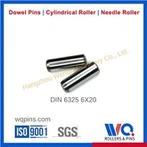
A spring pin, also known as a rolling pin, is a type of fastener used to connect two or more machine parts. They are called "spring pins" because they contain a spring that expands when inserted. What is confusing, however, is their size. They're wider than the holes they're inserted into, leaving many wondering how exactly they work.
Mechanics of Spring Pins
Even if they are wider than the hole they are inserted into, the spring pins will work because they will deform and then expand. They have at least one room that allows them access to the cargo hold. Once inside, the spring pins expand, causing them to press against the inside wall of the hole. This compression will continue to occur until the spring pin reaches the same diameter as the hole.
Coil spring pin
The most common type of spring pin is coiled. Also known as a coil spring pin, it has a coil spring that expands when inserted into a hole. They are made by forming metal strips into a spiral shape. Once inserted, the coil spring pins will begin to expand, creating a strong and secure environment for connected machine parts.
There are three generally recognized and accepted standards when it comes to manufacturing coil spring pins, including:
-
ISO 8750
-
ISO 8748
-
ISO 8751
Slotted spring pin
Also known as a C pin, a slotted spring pin consists of a rolled strip of steel, iron, aluminum, or other metal that expands when inserted. They rely on the same compression principle as coil spring pins, but they have a simpler design. Instead of coil springs, they use metal strips that expand and compress within the holes they are inserted into.
Spring Pins vs Cotter Pins: What's the Difference?
Although they are both used to connect components, spring pins are not the same as cotter pins. A cotter pin is just a metal fastener with two long pieces of metal that deform when inserted. When the cotter pin is bent, it holds the components together. However, cotter pins usually don't return to their original shape -- at least not without human intervention.
Spring pins have been around for over half a century. The world's first coil spring was invented in 1948 by German aviation mechanic and pilot Hermann Kohl. Since then, they have become common mechanical springs used in heavy machinery, cars, airplanes and even household furniture.