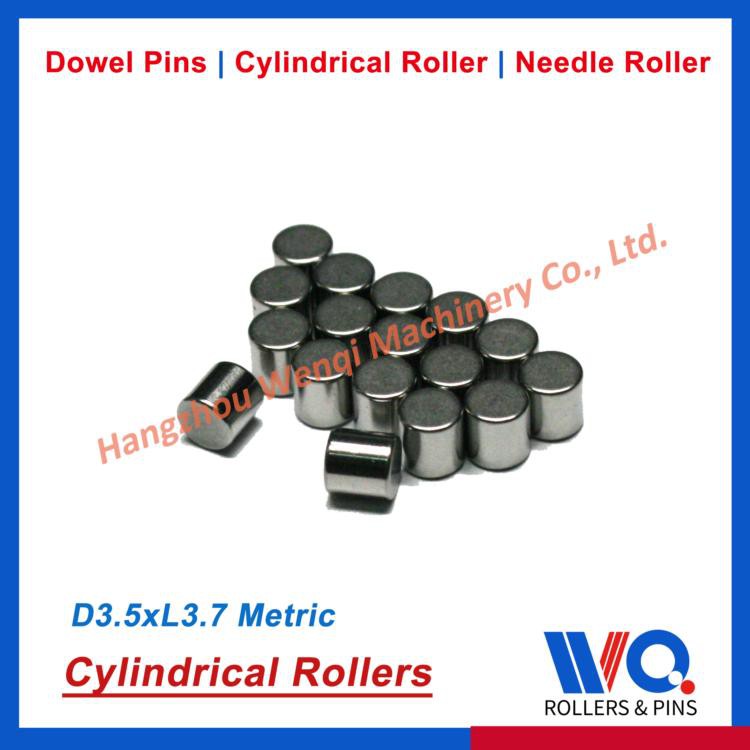
In mechanical equipment, pins are mainly used for assembly and positioning and can also be used for connection between parts, overload shear connection in relaxation-level safety devices, or locking of other fasteners. There are many types of pins. The main types are cylindrical pins, tapered pins, hole pins, split pins, and safety pins. The basic forms of pins are cylindrical pins and tapered pins. Both cylindrical pins and cylindrical pins are very common in daily life. What is the difference between the two in function? When should I use a cylindrical pin and when should I use a tapered pin? This article summarizes for you as follows:
As the name suggests, a taper pin is a conical pin. The column pin is a cylindrical cone pin.
The difference between cylindrical and tapered pins in action:
1. The appearance is different. As the name implies, the conical pin is a conical pin, and the conical pin is actually a truncated cone: that is, the top of the cone is truncated with a plane parallel to the bottom surface, and a "circular body" with a large end and a small end is obtained. The pins are cylindrical.
2. Different processing. Cylindrical pins can be pre-machined; tapered pins are usually matched.
3. Cylindrical pins are often used in the state that requires precise positioning (first processing). Cylindrical pins can only bear a small load, so they should not be disassembled frequently, while tapered pins are easy to install and have good self-locking performance. The effect of multiple disassembly on the positioning accuracy is relatively small, so tapered pins are often used where disassembly is frequent.
4. Cylindrical pins can resist shearing, and tapered pins are often used for positioning.
5. The scope of action is different. Cylindrical pins are mainly used for positioning and can also be used as coupling pins and safety pins. Tapered pins are also used for positioning and can be used as coupling pins.
Although the cylindrical pin and the tapered pin are just one word, they can be very different in production, processing, and function. What they have in common is that both are customized products designed for the needs of the industry. play an important role.