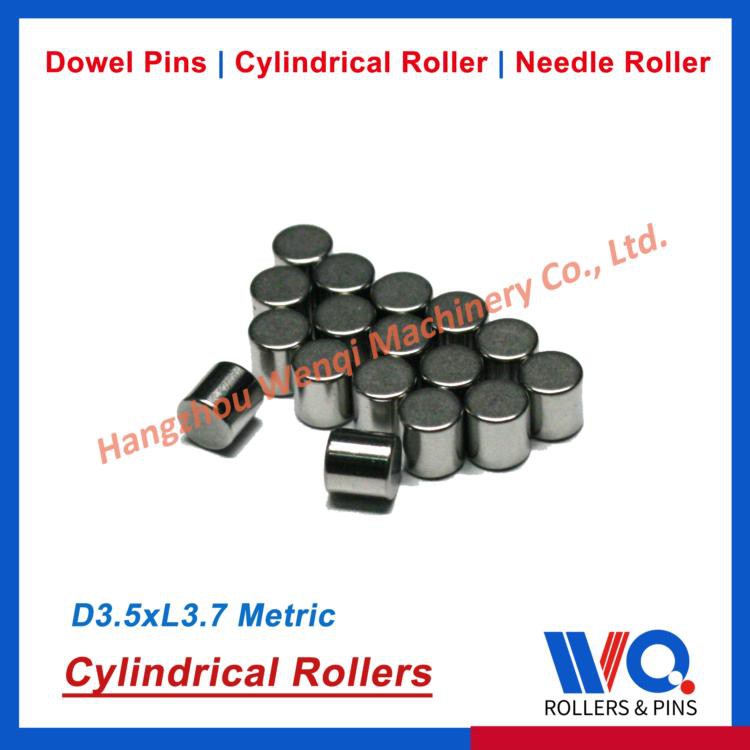
What are dowel pins?
Locating pins are sometimes called straight pins or locking pins. In a manufacturing environment, dowel pins are solid, headless, cylindrical metal rods that are machined to specific tolerances. These pins are often used to align, position or connect components to absorb lateral stress. However, they can also be used as pivots, shafts or hinges. Metal dowel pins are popular in manufacturing, metalworking, and precision engineering applications in many industries, such as: automotive, aerospace, tool and die, prototyping, electrical components, and military.
Why use metal dowels?
Dowel pins are a simple, effective and versatile fastener for many assembly processes. Here are some of the more important advantages of metal dowels:
Close tolerances provide repeatable installation results in high-volume production environments
Prevents lateral movement of adjacent components
No additional matching hardware required
Beveled/chamfered or tapered end guide pin to hole
Radius end resists part deformation during installation
How to choose the correct dowel pin
When determining the best metal dowel for your specific application, review the list below to determine the most important selection criteria. These considerations cover a wide range of application requirements. If you have special needs not covered below, let one of our skilled team members help you quote a custom part to meet your needs.
Nine basic dowel selection considerations
1. Metal dowel size
How to measure standard dowel pins?
Use calipers to measure dowel pin dimensions to determine dowel diameter and end-to-end length, including crown.
How to measure DIN 7 dowel pins?
DIN 7 metal dowel pins are still measured with a caliper to determine diameter, similar to standard pins. However, dowel lengths are measured from edge to edge, not end to end. This means that the length of the pin does not include the crown, only the length that fits the diameter.
What sizes of dowel pins does Wenqi offer?
We offer imperial or imperial alignment pins in diameters from 1/64" (0.0156") to 1-1/2" (1.5") and lengths from 3/32" (0.094") to 2" (2"). We offer metric sizes from 0.8mm to 30mm in diameter and 3mm to 180mm in length.
2. Standards
What dowel pin standards does Wenqi offer?
l ASME B18.8.2
l Standard 7
l DIN 6325
l DIN 7979D
l ISO 8734
l ISO 2338
3. Fit (Fitment) - Press Fit and Slip Fit
What is a press fit dowel pin?
Press fit dowels are metal dowels with slightly larger tolerances designed to fit holes slightly smaller than the pin diameter. This difference in pin diameter and hole diameter is called interference, and it creates pin tension in the hole to limit movement. Press-fit dowels are used in precision assemblies where close tolerance alignment of components is critical.
What is a slip-fit dowel pin?
Slip-fit dowels are metal dowels that slide freely in holes without the need for special tools.
What tool do I use to install the metal dowels?
Use a mandrel press to properly install the press-fit dowels. Never use hammers as they can damage the pins and cause them to fail.
The slip-fit locating pin has a certain clearance during installation and can be easily installed by hand.
4. Tolerance
Should diameter tolerances be specified when ordering metal pins?
If the tolerance of a metal dowel is specified by its manufacturing standard, you do not need to mention the tolerance when ordering. Most standards specify slightly larger tolerances for OEMs.
If you order non-standard pins, you should consider the consistency of the holes provided in the assembly and specify a tolerance that meets your application needs.
Over tolerance is different from press fit (slightly oversized) pins. Oversized pins can be ordered for repair operations where the original hole is enlarged by interference due to the installation of a press-fit metal dowel.
For applications where consistent diameter holes cannot be produced, undersized pins should be specified.
5. Material Type
What material types does Weiqi offer for metal dowel pins?
The dowel material should be determined by your application. When selecting the correct metal dowel, the body material of the hole, moisture environment, and other factors help determine which material to choose. Make sure to choose pins that are harder than the body material. Below is a list of dowel materials available from wenqi:
l Carbon steel positioning pin
l Alloy steel positioning pin
l Stainless steel dowel pins (303, 316 and 416 stainless steel)
l Hardened or unhardened
Why Choose Hardened Steel Dowels?
Hardened metal locating pins prevent deformation during installation due to interference of slightly oversized pins. Since deformed pins can cause failure, hardened metal pins strengthen the finished assembly when used with other types of fasteners. Remember, dowels are used to align components or act as pivot points. They have no functionality to group components together.
6. End style
What end styles are available for metal dowel pins?
Chamfered or beveled locating pins have a slight taper at the end to act as a guide for easier positioning of mounting holes.
Radius end dowels have rounded crowns to prevent pin deformation during installation.
end type
7. Removable metal dowels
What if I need to remove the dowel from the assembly?
The end of the pull-out dowel pin has an internally threaded hole that allows a bolt and washer to be installed to aid in the removal of the solid dowel pin. Once the bolt is installed in the hole, the pin can be removed using pliers, a vice or a special dowel puller. Pull-out pins are recommended for flush mounting with blind holes.
8. Gas or liquid exchange
How can I prevent air entrapment when installing metal dowels?
Slotted dowel pins have an internally threaded hole on one end, similar to pull-out dowels. The outer grooves are helically cut along the entire length, allowing gas or liquid to escape during insertion while maintaining 360° circumferential contact.
Flat vent dowels are the same as pull-out dowels, but add a narrow, ground flat that allows gas or liquid to escape when displaced during insertion.
The venting properties of grooved and flat vented metal dowels also reduce the suction forces that typically occur when solid metal dowels are removed from blind holes that cannot be vented.
9. Hollow Dowels
What is a hollow dowel?
Hollow dowels, sometimes also referred to as dowel bushings, spring dowels, or ground hollow dowels, are often used as a locating device for components that require precise positioning.
Why use hollow dowels?
Hollow pins allow insertion of conventional fasteners such as bolts or clevis pins to limit axial movement of the part.
The hollow interior of the pin eliminates the need for a separate drill hole and can be used as a conduit for wiring or plumbing.
Hollow dowel pins are much lighter than solid pins and can reduce the weight of the entire assembly.