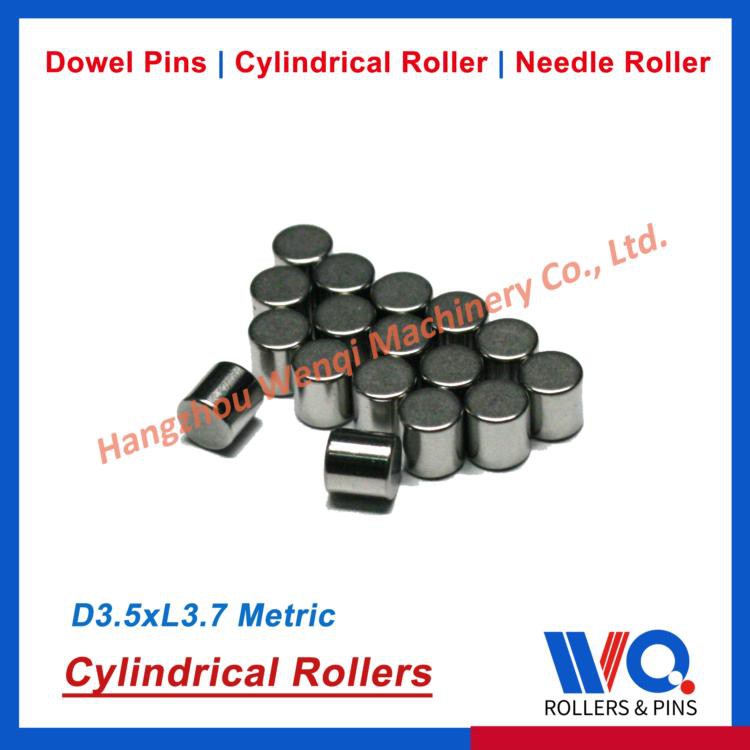
Ball bearings and roller bearings are important components of mechanical bearings. Their role is to support and reduce friction, thereby achieving smooth and efficient rotation. The difference between the two lies in their basic principles. Ball bearings use spherical rolling to share loads, while roller bearings use cylindrical, tapered, or conical rollers to share loads. Ball bearings and roller bearings are the two basic types of rolling elements that are distinguished from the two basic types of rolling bearings: ball → ball bearing. Roller → roller bearing. Another important difference between ball bearings and roller bearings is their load-carrying capacity. Due to their large roller length and small contact area, roller bearings have high load-bearing capacity and are suitable for applications that bear large loads and impact forces. Ball bearings can share very high lateral loads and are more economical and reasonable for small and medium-sized loads. The difference between balls and rollers is the way they contact the raceway. 1: The ball makes point contact with the raceway of the bearing ring.
As the load on the bearing increases, the contact point becomes an elliptical area.
A small contact area reduces rolling friction, allowing the ball bearing to accommodate high speeds while limiting its load-carrying capacity.
2: The rollers are in line contact with the raceway of the bearing ring.
As the load on the bearing increases, the contact line becomes a rectangular shape.
Due to the larger contact area and resulting friction, roller bearings can support heavier loads but at lower speeds than ball bearings of the same size
In practical applications, roller bearings have relatively small noise during operation because of the small contact area between the rollers and the bearing, but the friction loss is large. Ball bearings, because their rolling elements are spherical, have a larger contact area than roller bearings, making them noisier but causing smaller friction losses. Considering the above factors, roller bearings are suitable for applications with large impact force, slow speed, and large load, such as metallurgy, heavy machinery, cement machinery, etc. Ball bearings are suitable for applications with small and medium loads, high speeds and high precision requirements, such as motors, electrical, automobiles, aviation, etc.