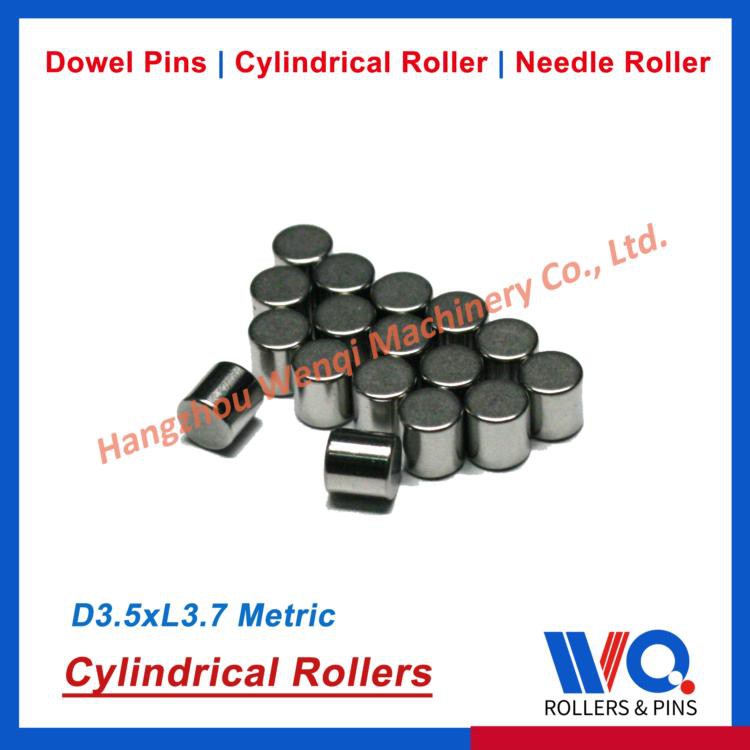
What is 52100 steel?
52100 steel is a high-carbon, chromium-alloy steel primarily used in bearings and other high-wear applications. It is also known as AISI 52100 alloy steel, 52100 carbon steel, or ASTM 52100 bearing steel. The first digit (5) indicates that this steel is primarily alloyed with chromium, while the second digit (2) signifies an alloying percentage greater than 1%. The last three digits represent the average percentage of carbon used in the steel; 52100 steel's average carbon content is 1.00%.
Advantages of Steel 52100:
· Superior hardness, 60-67 on Rockwell hardness scale (Rc) at room temperature
· High carbon chrome alloy steel
· Operates continually at temperatures up to 120°C
· Used to produce precision ball bearings and roller bearings
· Cost-effective
· Long working life
What is 52100 steel used for?
52100 steel is mostly used in steel bearings and machinery used in the production of bearings. The following are some typical uses for 52100 steel:
· 52100 steel is often utilized in anti-friction bearings because of its great wear resistance and capacity to hold lubricants.
· The toughness and strength of 52100 steel make it well-suited for punches, taps, and dies, which are essential tools in metalworking and fabrication.
· The hardness and durability of 52100 steel make it suitable for mill rolls, which are used in various industrial milling processes.
· The hardness and strength of 52100 steel make it suitable for fasteners, such as bolts and screws, that need to withstand high loads and provide secure connections.
· 52100 steel is used to make parts for cars and airplanes that need to be robust, long-lasting, and wear-resistant.
What Is the Chemical Composition of 52100 Steel?
The chemical composition of 52100 steel is outlined in Table 1:
Table 1: 52100 Steel Composition
| Fe | C | Cr | Mn | P | Si | S |
| Balance (96.5-97.32%) | 0.98-1.1% | 1.3-1.6% | 0.25-0.45% | <=0.025% | 0.15-0.3% | 0.03% |
What Is the Carbon Content of 52100 Steel?
52100 steel usually has a carbon content of between 0.98% and 1.10%. The steel's hardness, wear resistance, and capacity to hold its shape under extreme stress circumstances are all influenced by this high percentage. Although it usually falls within this range, the exact carbon content may vary significantly based on the particular production process and steel source.
Machinability Rating of 52100 Steel
The machinability rating of 52100 steel is 40%. AISI 52100 alloy steel can be cut and shaped using standard metal machining techniques. To improve its machinability, a spheroidizing annealing procedure may be beneficial. This entails heating the steel to a constant 649°C (1200°F) for a predetermined amount of time, then allowing it to cool gradually. By enhancing the microstructure and lowering the hardness of the steel, the spheroidizing annealing process helps make the material more machinable.
51200 Steel Heat Treatment
52100 steel is heated at 816°C, followed by quenching in oil. Before performing this process, it is subjected to normalizing heat treatment at 872°C, followed by slow cooling in order to reduce the machining stress.
· Hot Working: 52100 steel alloy can be hot worked at 205 to 538°C.
· Cold Working: 52100 steel can be cold worked using conventional techniques in the annealed or normalized conditions.
· Annealing: For spheroidized annealing, the following isothermal anneal is recommended:
* 1500ºF (815ºC) for 3 hours
* 1350ºF (735ºC) for 4 hours
* 1250ºF (675ºC) for 3 hours
* Slow cool to 1000ºF (540ºC), then air cool.
· Quenching: 52100 steel could be hardened by quenching in water from 801 to 829 degrees or quenching in oil from 816 to 842 degrees.
· Tempering: Temper to desired hardness as indicated by tempering curves after water or oil quench.