


In the realm of mechanical engineering and manufacturing, dowel pins play a crucial role in ensuring precision and stability in various applications. As a trusted dowel pins supplier, I am often asked about the shear strength of dowel pins. This blog post aims to provide a comprehensive understanding of what shear strength is, how it relates to dowel pins, and why it matters in real - world applications.
Understanding Shear Strength
Shear strength is a fundamental mechanical property that measures a material's ability to resist forces that cause its layers to slide past one another. In the context of dowel pins, shear strength refers to the maximum amount of shear force a dowel pin can withstand before it fails. When a dowel pin is subjected to a load that tries to cut or slice it, the internal resistance of the pin material comes into play. If the applied shear force exceeds the shear strength of the dowel pin, the pin will break or deform, which can lead to the failure of the entire assembly.
The shear strength of a material is typically determined through standardized testing procedures. A common test is the shear test, where a specimen of the material is placed between two fixtures, and a force is applied parallel to the cross - sectional area of the specimen. The maximum force at which the specimen fails is recorded, and the shear strength is calculated by dividing this force by the cross - sectional area of the specimen.

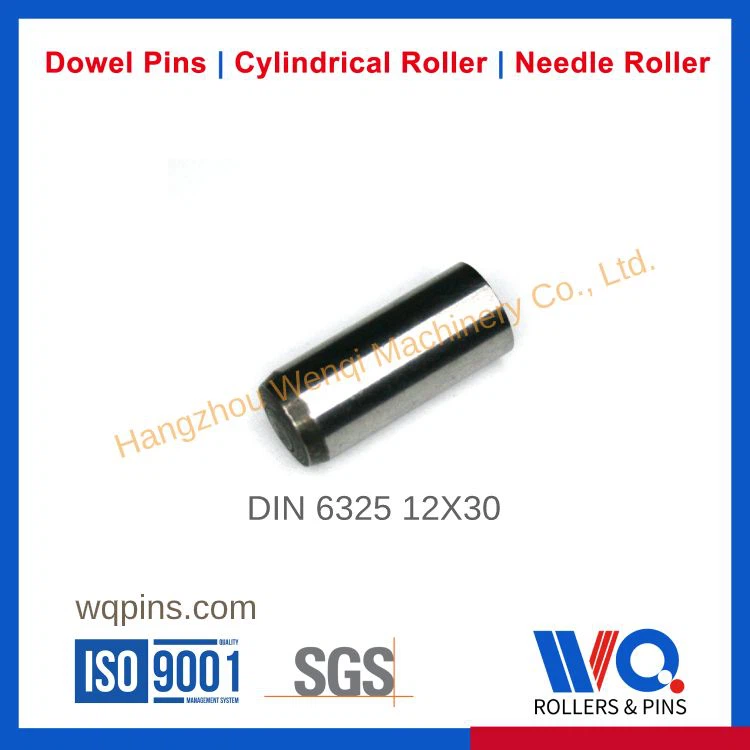
Factors Affecting the Shear Strength of Dowel Pins
Material
The material of the dowel pin is one of the most significant factors influencing its shear strength. Different materials have different inherent strengths. For example, steel dowel pins are known for their high strength and durability. They can withstand significant shear forces due to the properties of steel, such as its high carbon content and the way it is heat - treated. Stainless steel dowel pins, on the other hand, offer good corrosion resistance along with relatively high shear strength. Aluminum dowel pins are lighter in weight but generally have lower shear strength compared to steel pins.
Diameter and Length
The diameter of a dowel pin has a direct impact on its shear strength. A larger - diameter dowel pin has a greater cross - sectional area, which means it can resist more shear force. For instance, a Dowel Pin M6 will typically have a higher shear strength than a smaller - diameter pin because of its larger cross - sectional area. The length of the dowel pin also matters. While a longer dowel pin may provide more surface area for load distribution, an overly long pin may be more prone to bending under shear loads, which can reduce its effective shear strength.
Surface Finish
The surface finish of a dowel pin can affect its shear strength. A smooth surface finish can reduce friction and stress concentrations, which helps the pin to better distribute the shear load. Rough surfaces, on the other hand, can act as stress raisers, where the stress is concentrated at certain points. This can lead to premature failure of the pin under shear forces.
Manufacturing Process
The way a dowel pin is manufactured can influence its shear strength. Precision - machined dowel pins generally have more consistent dimensions and better internal structure compared to pins made by less precise methods. Heat - treating processes can also enhance the shear strength of dowel pins. For example, quenching and tempering can improve the hardness and toughness of steel dowel pins, increasing their ability to resist shear forces.
Importance of Shear Strength in Dowel Pin Applications
Alignment and Positioning
In many mechanical assemblies, dowel pins are used for alignment and positioning purposes. For example, in Print Head Alignment Pins, the pins need to maintain their position accurately under various operating conditions. If the shear strength of the dowel pins is insufficient, they may break or deform, causing misalignment of the print head. This can lead to poor print quality, equipment malfunction, and increased maintenance costs.
Load Transfer
Dowel pins are often used to transfer loads between different components in an assembly. In a machine with moving parts, the dowel pins need to be able to transfer the shear forces generated during operation. If the shear strength of the pins is too low, the pins may fail, and the load transfer will be disrupted. This can result in damage to other components in the assembly and potentially lead to a complete breakdown of the machine.
Structural Integrity
In structures where dowel pins are used to join different parts, the shear strength of the pins is crucial for maintaining the overall structural integrity. For example, in a wooden furniture assembly, dowel pins are used to connect different wooden pieces. If the shear strength of the dowel pins is not adequate, the joints may come apart under normal use, compromising the stability and safety of the furniture.
Calculating the Shear Strength of Dowel Pins
The shear strength of a dowel pin can be estimated using the following formula:
[ \tau=\frac{F}{A} ]
where (\tau) is the shear strength, (F) is the maximum shear force the pin can withstand, and (A) is the cross - sectional area of the pin.
The cross - sectional area of a cylindrical dowel pin can be calculated using the formula (A = \frac{\pi d^{2}}{4}), where (d) is the diameter of the pin.
However, it's important to note that in real - world applications, the actual shear strength may be affected by factors such as the fit of the pin in the hole, the presence of stress concentrations, and the type of loading. Therefore, it's often necessary to refer to manufacturer's specifications or conduct actual testing to determine the reliable shear strength of a dowel pin in a specific application.
Choosing the Right Dowel Pins Based on Shear Strength Requirements
When selecting dowel pins for a particular application, it's essential to consider the shear strength requirements. First, analyze the maximum shear forces that the dowel pins will be subjected to in the assembly. This may involve calculating the forces based on the operating conditions, such as the weight of the components, the speed of movement, and the type of loading (static or dynamic).
Based on the calculated shear forces, choose a dowel pin material and size that can provide the necessary shear strength. For high - shear applications, steel dowel pins with appropriate diameters are often a good choice. If corrosion resistance is also a concern, stainless steel pins may be more suitable.
It's also advisable to consult with a mechanical engineer or the dowel pin supplier for expert advice. As a dowel pin supplier, we have extensive experience in helping customers select the right pins for their specific needs. We can provide detailed information about the shear strength of different types of dowel pins and offer guidance on installation and maintenance.
Conclusion
The shear strength of dowel pins is a critical factor in ensuring the proper functioning and reliability of mechanical assemblies. Understanding the factors that affect shear strength, such as material, diameter, length, surface finish, and manufacturing process, is essential for selecting the right dowel pins for a given application.
As a trusted dowel pin supplier, we offer a wide range of high - quality dowel pins, including Print Head Alignment Pins, Dowel Pin M6, and 1mm Cylinder Pins. Our products are designed to meet the highest standards of shear strength and performance.
If you are in need of dowel pins for your project, we invite you to contact us for a detailed discussion about your requirements. Our team of experts is ready to assist you in choosing the right dowel pins and ensuring a successful installation.
References
- Budynas, R. G., & Nisbett, J. K. (2011). Shigley's Mechanical Engineering Design. McGraw - Hill.
- Ugural, A. C., & Fenster, S. K. (2003). Advanced Strength and Applied Elasticity. Pearson Education.