


As a seasoned supplier in the field of needle rollers, I am frequently asked whether needle rollers are available in metric sizes. This question is not only common but also crucial for many industries that rely on precision components. In this blog post, I will delve into the availability of metric-sized needle rollers, their applications, and why they are a popular choice in various sectors.
The Availability of Metric-Sized Needle Rollers
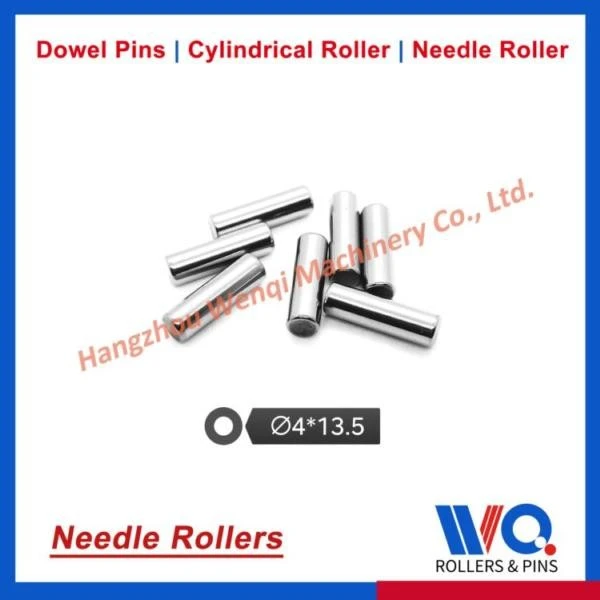
The short answer is yes, needle rollers are indeed available in metric sizes. In fact, metric sizing is widely adopted in the manufacturing and engineering industries around the world. Metric measurements offer a standardized system that simplifies the design and production processes. This standardization is particularly important when it comes to international trade and cooperation, as it ensures compatibility and interchangeability of components across different regions.
Our company, as a leading supplier of needle rollers, offers a comprehensive range of metric-sized products. We understand the diverse needs of our customers and strive to provide them with high-quality needle rollers that meet their specific requirements. Whether you need small, precision-engineered needle rollers for intricate machinery or larger ones for heavy-duty applications, we have the right solution for you.
Types of Metric-Sized Needle Rollers
There are several types of metric-sized needle rollers available in the market, each designed for specific applications. Here are some of the most common types:
NRA Needle Roller Pins
NRA Needle Roller Pins are widely used in various industries due to their high load-carrying capacity and excellent performance. These needle rollers are typically made of high-quality steel and are heat-treated to enhance their hardness and durability. They are often used in automotive engines, industrial machinery, and aerospace applications.
Hardened Needle Roller
Hardened Needle Rollers are designed to withstand high pressures and extreme conditions. They are made from hardened steel and have a smooth surface finish, which reduces friction and wear. These needle rollers are commonly used in heavy-duty applications such as construction equipment, mining machinery, and agricultural vehicles.
Bearing Cap Needle Roller
Bearing Cap Needle Rollers are specifically designed for use in bearing caps. They provide support and reduce friction between the bearing cap and the shaft, ensuring smooth operation and extended service life. These needle rollers are commonly used in automotive engines, transmissions, and other mechanical systems.

Applications of Metric-Sized Needle Rollers
Metric-sized needle rollers are used in a wide range of applications across various industries. Here are some of the most common applications:
Automotive Industry
In the automotive industry, needle rollers are used in engines, transmissions, and other critical components. They help to reduce friction, improve efficiency, and increase the lifespan of the components. For example, needle rollers are used in the camshaft and crankshaft bearings of engines, as well as in the gearboxes of transmissions.
Industrial Machinery
In industrial machinery, needle rollers are used in a variety of applications, including conveyor systems, machine tools, and packaging equipment. They provide support and reduce friction, allowing the machinery to operate smoothly and efficiently. For example, needle rollers are used in the bearings of conveyor rollers, as well as in the spindles of machine tools.
Aerospace Industry
In the aerospace industry, needle rollers are used in aircraft engines, landing gear, and other critical components. They must be able to withstand high temperatures, pressures, and vibrations, while providing reliable performance. For example, needle rollers are used in the bearings of aircraft engine turbines, as well as in the actuators of landing gear systems.
Advantages of Using Metric-Sized Needle Rollers
There are several advantages to using metric-sized needle rollers in your applications. Here are some of the key benefits:
Standardization
Metric sizing is a standardized system that is widely used around the world. This means that metric-sized needle rollers are readily available and can be easily interchanged with other components. This simplifies the design and production processes, as well as reduces the cost of inventory management.
Precision
Metric-sized needle rollers are manufactured to precise tolerances, ensuring consistent performance and reliability. This is particularly important in applications where high precision is required, such as in the automotive and aerospace industries.
Compatibility
Metric-sized needle rollers are compatible with a wide range of other components, including bearings, shafts, and housings. This makes them a versatile choice for many different applications.
Cost-Effective
Metric-sized needle rollers are generally more cost-effective than their imperial counterparts. This is because the metric system is more widely used and produced in larger quantities, which reduces the cost of manufacturing and distribution.
Conclusion
In conclusion, needle rollers are indeed available in metric sizes, and they offer many advantages over their imperial counterparts. As a supplier of needle rollers, we are committed to providing our customers with high-quality products that meet their specific requirements. Whether you need NRA Needle Roller Pins, Hardened Needle Rollers, or Bearing Cap Needle Rollers, we have the right solution for you.
If you are interested in learning more about our metric-sized needle rollers or would like to discuss your specific requirements, please do not hesitate to contact us. Our team of experts is always available to provide you with the information and support you need. We look forward to working with you to find the perfect needle roller solution for your application.
References
- "Engineering Design Handbook: Bearings and Lubricants," U.S. Army Materiel Command, 1969.
- "Mechanical Design Handbook," Robert C. Juvinall and Kurt M. Marshek, 2006.
- "Handbook of Bearing Design and Application," Nicholas P. Chironis, 1988.