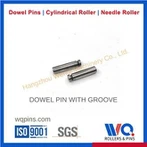
Introduction of commonly used anti-corrosion technology for fastener pins
Fastener pins are the most common parts of mechanical equipment used for fastening connections. They are used in specific environments, and the long-term interaction between fastener pins and the environment will always make their state and Corrosion occurs when the performance changes, which is one of the main forms of fastener pin failure.” The corrosion of fastener pins will affect the detachable and repeated installation of the thread if it is mild, and it will damage the strength of the connection between components, and even damage the connection between components. It will lead to the sudden failure of the workpiece and cause catastrophic accidents. Therefore, the corrosion resistance of fastener pins has always been a topic of great concern to everyone.
Commonly used anti-corrosion technologies for fastener pins
The commonly used anti-corrosion technology for fastener pins The anti-corrosion treatment of fastener pins is generally to form a coating or anti-corrosion layer on the surface of the workpiece by a certain method to hinder the influence of the external environment on the fastener pin itself and achieve the effect of corrosion resistance. There are four main anti-corrosion technologies for fastener pins: film treatment technology, metal coating technology, coating technology and changing the internal structure of the metal (such as stainless steel).
1. Film processing technology
The film treatment technology mainly refers to the treatment process of forming a stable chemical (electrochemical) conversion film on the metal surface by chemical or electrochemical methods. For example, in urban rail vehicles, the film treatment of the fastener pins is more black/blue treatment and phosphating treatment.