


When it comes to the world of fasteners, 3mm dowel pins play a crucial role in a wide range of applications. As a 3mm dowel pin supplier, I often encounter questions about the standard hardness of these pins. In this blog post, I'll delve into what the standard hardness of a 3mm dowel pin is, why it matters, and how it impacts the performance of the pins in different scenarios.
Understanding Dowel Pins
Dowel pins are cylindrical rods used to align two or more components precisely. They are commonly made of various materials such as steel, stainless steel, brass, and aluminum. The 3mm dowel pin, with its relatively small diameter, is frequently used in applications where precision alignment is required, such as in machinery, automotive parts, and electronic devices.
Importance of Hardness in Dowel Pins
Hardness is a critical property of dowel pins as it determines their ability to withstand wear, deformation, and shear forces. A dowel pin with the appropriate hardness will ensure a secure and long - lasting connection between components. If the pin is too soft, it may deform under load, leading to misalignment and potential failure of the assembly. On the other hand, if the pin is too hard, it may become brittle and prone to cracking, which can also compromise the integrity of the joint.
Standard Hardness for 3mm Dowel Pins
The standard hardness of a 3mm dowel pin can vary depending on the material and the specific application requirements.
Steel Dowel Pins
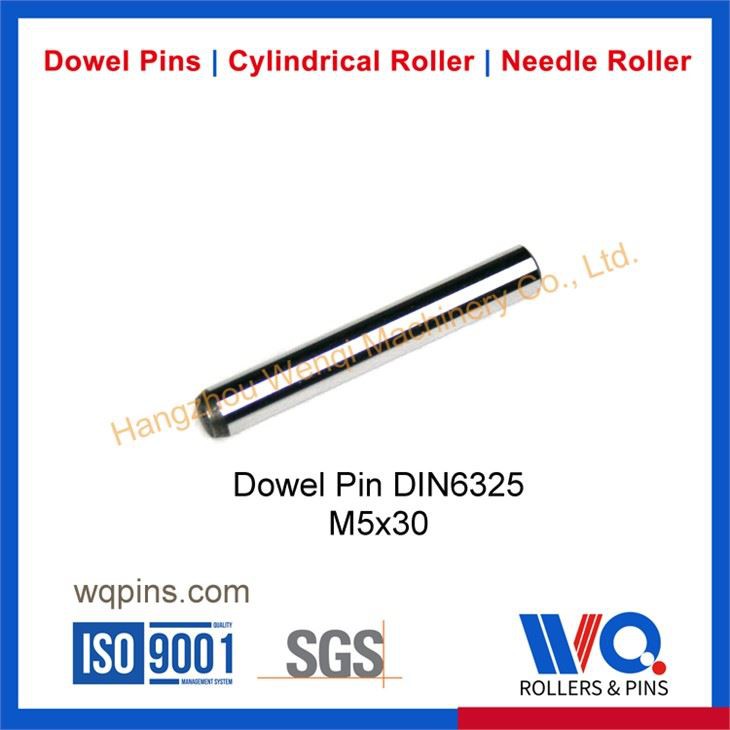
Steel is one of the most commonly used materials for dowel pins due to its high strength and durability. For steel dowel pins, the standard hardness typically ranges from 40 to 60 HRC (Rockwell Hardness Scale). This hardness range provides a good balance between strength and ductility. A pin with a hardness around 40 - 45 HRC is relatively ductile and can withstand some deformation without breaking. It is suitable for applications where the pin may be subject to shock loads. Pins with a hardness of 55 - 60 HRC are harder and more wear - resistant, making them ideal for applications where precision alignment is critical and the pin is likely to experience high - frequency contact or sliding. You can find a wide range of Steel Dowel Pin DIN6325 on our website.
Stainless Steel Dowel Pins
Stainless steel dowel pins are favored for their corrosion resistance, making them suitable for applications in harsh environments. The standard hardness of stainless steel dowel pins usually falls in the range of 30 to 50 HRC. The lower end of this range (30 - 35 HRC) offers better corrosion resistance and some degree of ductility, while the higher end (45 - 50 HRC) provides increased wear resistance.
Brass and Aluminum Dowel Pins
Brass and aluminum dowel pins are softer compared to steel and stainless steel pins. Brass dowel pins typically have a hardness of around 80 - 120 HB (Brinell Hardness Scale), and aluminum dowel pins have an even lower hardness, usually in the range of 20 - 60 HB. These softer materials are often used in applications where the components being joined are also relatively soft, or where electrical conductivity is required.
Factors Affecting Hardness
Several factors can affect the hardness of a 3mm dowel pin:
Heat Treatment
Heat treatment is a common method used to adjust the hardness of dowel pins. For steel pins, processes such as quenching and tempering can be used to increase the hardness. Quenching involves rapidly cooling the heated pin in a quenching medium, which hardens the steel. Tempering is then carried out to relieve internal stresses and improve the ductility of the hardened steel.

Alloying Elements
The addition of alloying elements such as chromium, nickel, and molybdenum can also affect the hardness of the dowel pin. These elements can enhance the strength and hardness of the material, as well as improve its corrosion resistance.
Manufacturing Process
The manufacturing process can also have an impact on the hardness. For example, cold - heading, which is a common method for producing dowel pins, can work - harden the material, increasing its hardness. However, excessive work - hardening can make the pin brittle.
Testing the Hardness of Dowel Pins
To ensure that the 3mm dowel pins meet the required hardness standards, various testing methods can be used. The Rockwell hardness test is one of the most commonly used methods for steel and stainless steel dowel pins. In this test, a diamond cone or a hardened steel ball is pressed into the surface of the pin, and the depth of the indentation is measured. The Brinell hardness test is often used for softer materials such as brass and aluminum. In this test, a hardened steel ball is pressed into the surface of the pin under a specified load, and the diameter of the indentation is measured.
Applications of 3mm Dowel Pins and the Role of Hardness
Machinery
In machinery, 3mm dowel pins are used to align gears, shafts, and other components. A pin with the appropriate hardness is essential to ensure smooth operation and prevent premature wear. For example, in high - speed rotating machinery, a hard dowel pin (e.g., 55 - 60 HRC) can maintain its shape and alignment under the high - speed forces, reducing vibration and noise.
Automotive
In the automotive industry, 3mm dowel pins are used in engine components, transmission systems, and body assemblies. Harder dowel pins are often used in areas where high strength and wear resistance are required, such as in the engine block and cylinder head. Softer pins may be used in less critical areas or in components that require some degree of flexibility. You can explore our Bearing Positioning Dowel Pins for automotive applications.
Electronics
In electronic devices, 3mm dowel pins are used for precise alignment of circuit boards and other components. Since electronic components are often delicate, softer dowel pins made of brass or aluminum are commonly used to prevent damage to the components during assembly.
Why Choose Our 3mm Dowel Pins
As a 3mm dowel pin supplier, we take pride in offering high - quality dowel pins that meet the industry - standard hardness requirements. Our pins are manufactured using advanced processes and undergo strict quality control measures to ensure consistent hardness and performance. We have a wide range of dowel pins available, including Dowel Alignment Pins, suitable for various applications.
If you are in the market for 3mm dowel pins, we invite you to contact us for a detailed discussion about your specific requirements. Whether you need pins with a specific hardness for a high - precision application or a large quantity of standard pins, we can provide you with the right solution. Our team of experts is always ready to assist you in choosing the most suitable dowel pins for your project.
References
- ASM Handbook Volume 1: Properties and Selection: Irons, Steels, and High - Performance Alloys
- Machinery's Handbook, 31st Edition
- Fasteners Handbook by Industrial Fasteners Institute