


Hey there! As a supplier of dowel pins, I'm super stoked to take you through the manufacturing process of these nifty little components. Dowel pins are used in a ton of applications, from woodworking to industrial machinery. They're like the unsung heroes that hold things together, quite literally.
Let's start with the raw materials. The choice of material for dowel pins depends on the specific application they're meant for. Common materials include steel, stainless steel, brass, and even plastic. Steel is a popular choice because it's strong and relatively inexpensive. Stainless steel is great when you need corrosion resistance, like in outdoor or wet environments. Brass is often used for its aesthetic appeal and good machinability, and plastic dowel pins are lightweight and non - conductive.
Once we've selected the right material, the first step in the manufacturing process is cutting the material to the appropriate length. This is usually done using a saw or a cutting machine. We need to be really precise here because the length of the dowel pin is crucial for its proper function. If it's too long or too short, it might not fit correctly into the holes it's meant to go into.

After cutting, the next step is turning. Turning is a machining process where the dowel pin blank is rotated on a lathe, and a cutting tool is used to shape it to the desired diameter. This is where we start to give the dowel pin its final form. The lathe allows us to create a smooth and uniform surface finish. We can also create different profiles on the dowel pin, like chamfers at the ends. Chamfers are really useful as they make it easier to insert the dowel pin into a hole without damaging the edges.
Once the turning process is complete, we move on to grinding. Grinding is used to achieve a high level of dimensional accuracy and a very smooth surface finish. We use grinding wheels to remove any small imperfections left from the turning process. This is especially important for dowel pins that need to fit very precisely into holes, like Dowel Centering Pins. A smooth surface finish also reduces friction when the dowel pin is inserted or removed from a hole.
Now, if the dowel pin is made of steel, it might go through a heat - treating process. Heat treating can significantly improve the strength and hardness of the dowel pin. There are different types of heat - treating processes, such as quenching and tempering. Quenching involves heating the dowel pin to a high temperature and then rapidly cooling it in a quenching medium, like oil or water. This makes the steel very hard but also brittle. That's why we follow it up with tempering, which involves reheating the dowel pin to a lower temperature to reduce the brittleness and make it more ductile.
After heat treating, we might apply a surface coating to the dowel pin. Coatings can serve different purposes. For example, a zinc coating can provide additional corrosion resistance, which is great for dowel pins used in outdoor or harsh environments. A black oxide coating can give the dowel pin a nice, sleek appearance and also offer some degree of corrosion protection.
Once all the machining and finishing processes are done, the dowel pins go through a quality control check. We measure the dimensions of the dowel pins using precision measuring tools like micrometers and calipers to make sure they meet the required specifications. We also check the surface finish and look for any visible defects, like cracks or scratches. Only the dowel pins that pass the quality control check are packaged and ready to be shipped to our customers.
There are different types of dowel pins available in the market, each with its own unique features and applications. For example, Dowel Pins For Industrial Equipment are designed to withstand the high stresses and vibrations found in industrial machinery. These dowel pins are often made of high - strength materials and are precision - machined to ensure a perfect fit.
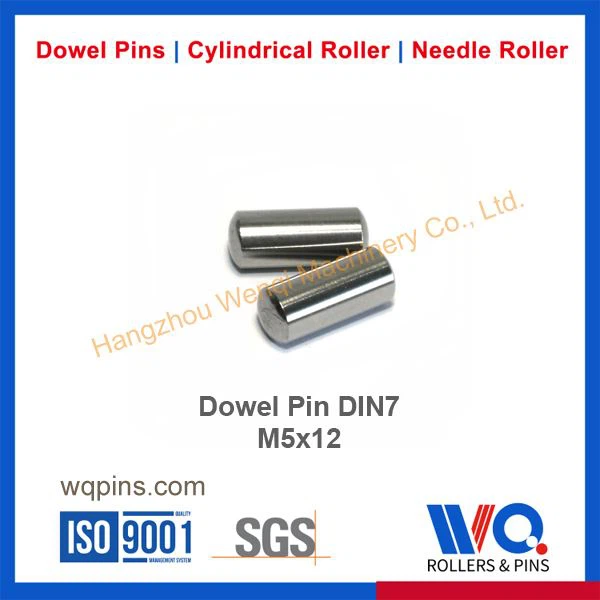
Another popular type is the M5x12 Dowel Pins. The "M5" refers to the diameter of the dowel pin, which is 5 millimeters, and the "12" refers to its length, which is 12 millimeters. These dowel pins are commonly used in electronics and small - scale machinery where space is limited.
So, there you have it - the manufacturing process of dowel pins in a nutshell. It's a complex but fascinating process that involves a lot of precision and attention to detail. Whether you're a woodworker looking for dowel pins to join pieces of wood or an industrial engineer in need of high - performance dowel pins for your machinery, we've got you covered.
If you're interested in purchasing dowel pins for your project, we'd love to have a chat with you. Just reach out to us, and we can discuss your specific requirements, the best type of dowel pins for your application, and get you a great deal. We're committed to providing high - quality dowel pins at competitive prices, and we're always happy to help our customers find the perfect solution for their needs.
References
- Machinery's Handbook: A comprehensive guide to machining processes and materials.
- Fastener Manufacturing Standards: Industry standards that govern the production of dowel pins.