


Hey there! As a supplier of 3mm dowel pins, I often get asked about the ductility of these little yet crucial components. So, let's dig into what ductility really means for a 3mm dowel pin and why it matters.
First off, what is ductility? In simple terms, ductility is the ability of a material to deform under tensile stress without breaking. When we talk about a 3mm dowel pin, we're looking at how much it can stretch or bend before it snaps. This property is super important because dowel pins are used in a wide range of applications where they might experience some level of stress.
Now, the ductility of a 3mm dowel pin depends on several factors. One of the most significant factors is the material it's made from. We commonly use materials like steel, brass, and stainless - steel for these pins. Each material has its own unique ductility characteristics.
Steel dowel pins are quite popular. They usually offer a good balance between strength and ductility. High - carbon steel pins are stronger but less ductile compared to low - carbon steel ones. Low - carbon steel can be stretched to a greater extent before failure, which makes it a great choice for applications where the pin might need to withstand some bending or stretching without breaking. For example, in machinery where there's a bit of movement or vibration, a low - carbon steel 3mm dowel pin can adjust to the forces and still hold its shape.
Brass dowel pins, on the other hand, are known for their relatively high ductility. Brass is a softer metal compared to steel, and it can be easily deformed under stress. This makes brass pins ideal for applications where a more flexible pin is required. They're often used in woodworking or in some precision instruments where a small amount of bending won't cause a major issue.
Stainless - steel dowel pins are valued for their corrosion resistance, but their ductility can vary depending on the specific grade. Some grades of stainless steel are more ductile than others. For instance, austenitic stainless steels are generally more ductile than martensitic ones. If you're using a 3mm stainless - steel dowel pin in a marine environment or a place with high humidity, you'd want to choose a grade that offers both good corrosion resistance and sufficient ductility.
Another factor that affects the ductility of a 3mm dowel pin is the manufacturing process. Pins that are cold - formed tend to have different ductility properties compared to those that are hot - formed. Cold - forming can increase the strength of the pin but may reduce its ductility slightly. On the other hand, hot - forming can result in a more uniform structure, which might enhance the pin's ductility.
The surface finish of the dowel pin can also play a role. A smooth surface finish can reduce stress concentrations, which in turn can improve the pin's ductility. Rough surfaces can act as stress raisers, making the pin more likely to break under stress.
Let's talk about some real - world applications and how the ductility of a 3mm dowel pin comes into play. In automotive engines, dowel pins are used to align different components. These pins need to have the right amount of ductility to withstand the vibrations and thermal stresses generated by the engine. If a pin is too brittle and lacks ductility, it might break under these conditions, leading to misalignment and potential engine damage.
In the furniture industry, 3mm dowel pins are used to join pieces of wood. The ductility of the pin allows it to absorb some of the stress caused by changes in humidity and temperature. Wood expands and contracts, and a ductile dowel pin can adjust to these changes without causing the joint to fail.
Now, if you're in the market for 3mm dowel pins, you might also be interested in other types of fastener pins. We also supply 45mm Dowel Pin, which are larger and can be used in more heavy - duty applications. And for those who need something a bit different, our 18mm Parallel Pins offer unique features. We also have Selector Shaft Pins for specific mechanical applications.

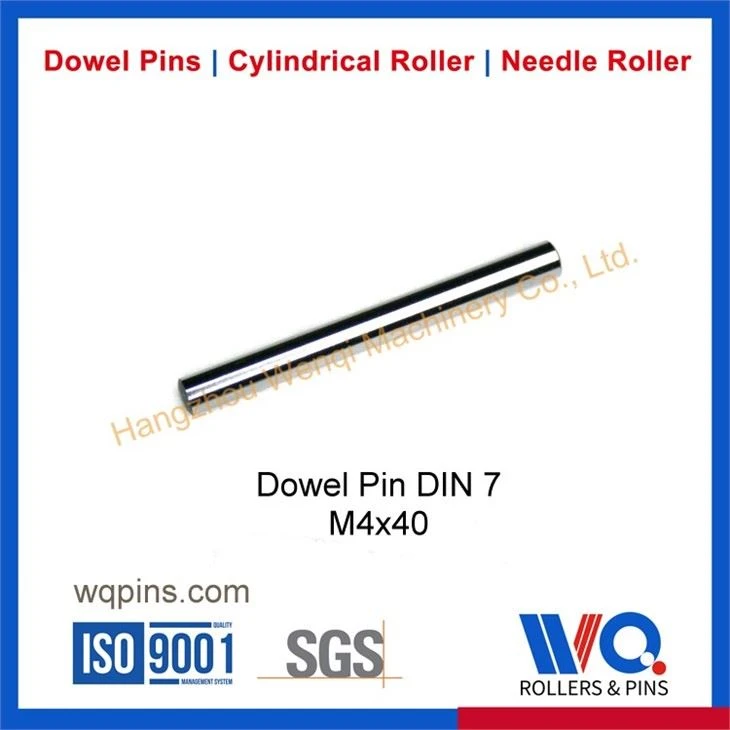
Understanding the ductility of a 3mm dowel pin is crucial for choosing the right pin for your application. Whether you need a highly ductile pin for a flexible joint or a stronger, less ductile one for a high - stress situation, we've got you covered. We're here to provide you with high - quality dowel pins that meet your specific requirements.
If you're interested in purchasing our 3mm dowel pins or any of our other products, don't hesitate to reach out for a procurement discussion. We're more than happy to help you find the perfect fastener solutions for your projects.
References:
- "Metals Handbook: Properties and Selection: Irons, Steels, and High - Performance Alloys"
- "Engineering Materials and Their Applications"