


Needle rollers are essential components in various mechanical applications, offering high load - carrying capacity and low friction. As a reliable needle rollers supplier, I often receive inquiries about the cage materials of needle rollers. In this blog, I will delve into the different cage materials used for needle rollers, their characteristics, and applications.
The Role of the Cage in Needle Rollers
Before discussing the cage materials, it's important to understand the role of the cage in needle rollers. The cage serves several crucial functions. Firstly, it maintains the proper spacing between the needle rollers, preventing them from contacting each other and reducing friction and wear. Secondly, it guides the needle rollers during operation, ensuring smooth rotation and consistent performance. Finally, the cage helps to hold the needle rollers in place, especially in high - speed or high - load applications.
Common Cage Materials for Needle Rollers
1. Steel Cages
Steel is one of the most commonly used cage materials for needle rollers. There are different types of steel used, such as carbon steel and stainless steel.
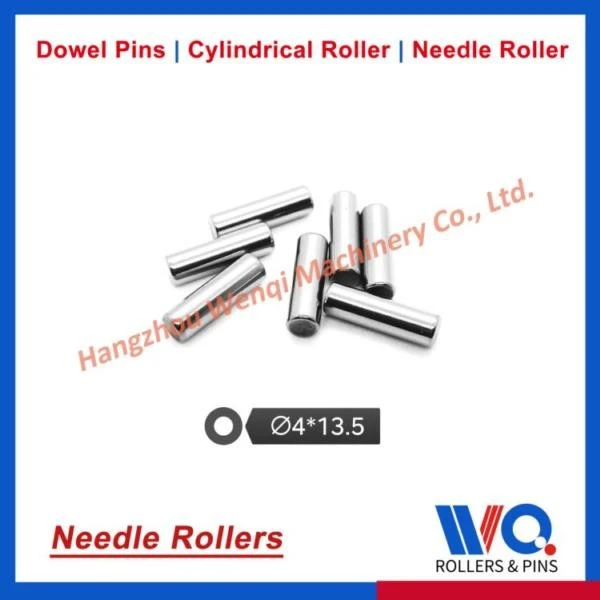

- Carbon Steel Cages: Carbon steel cages are known for their high strength and durability. They can withstand high loads and are suitable for applications where the operating environment is relatively clean and dry. Carbon steel cages are often heat - treated to improve their hardness and wear resistance. For example, in heavy - duty industrial machinery, carbon steel cages can ensure the long - term stability of needle rollers under high - stress conditions.
- Stainless Steel Cages: Stainless steel cages offer excellent corrosion resistance. They are ideal for applications where the needle rollers are exposed to moisture, chemicals, or harsh environments. In the food processing industry or marine applications, stainless steel cages prevent rust and corrosion, ensuring the hygiene and reliability of the equipment. Our Needle Roller Dowel Pin For Cylindrical Bearings can be equipped with stainless steel cages for such demanding applications.
2. Brass Cages
Brass cages are another popular choice. Brass has good machinability, which allows for the production of complex cage designs. It also has a relatively low coefficient of friction, which helps to reduce energy consumption during operation.
- Brass cages are often used in applications where quiet operation is required. For example, in precision machinery such as printing presses or optical equipment, the low - noise characteristics of brass cages are highly valued. Additionally, brass has a certain degree of self - lubrication, which can enhance the performance of needle rollers in some cases.
3. Polyamide Cages
Polyamide, also known as nylon, is a synthetic polymer that is increasingly being used as a cage material for needle rollers.
- Lightweight and Low - Noise: Polyamide cages are lightweight, which can reduce the overall weight of the bearing assembly. This is beneficial for applications where weight reduction is a priority, such as in aerospace or automotive industries. Moreover, polyamide cages offer low - noise operation, making them suitable for applications where noise pollution needs to be minimized.
- Self - Lubricating Properties: Polyamide has self - lubricating properties, which can reduce the need for external lubrication in some cases. This can simplify the maintenance of the equipment and reduce the risk of lubricant leakage. Our Bearing Cap Needle Roller can be supplied with polyamide cages for applications that require these features.
4. Phenolic Resin Cages
Phenolic resin cages are made from a thermosetting plastic. They have high mechanical strength and good dimensional stability.
- High - Temperature Resistance: Phenolic resin cages can withstand relatively high temperatures, making them suitable for applications where the operating temperature is elevated. In some industrial ovens or high - speed engines, phenolic resin cages can maintain their shape and performance under high - temperature conditions.
Factors Influencing Cage Material Selection
When choosing the cage material for needle rollers, several factors need to be considered:
1. Load and Speed
The load and speed requirements of the application are crucial. High - load applications typically require cages with high strength, such as steel cages. For high - speed applications, lightweight materials like polyamide cages may be more suitable as they can reduce the centrifugal force and energy consumption.
2. Operating Environment
The operating environment, including temperature, humidity, and the presence of chemicals, also affects the cage material selection. In corrosive environments, stainless steel or brass cages are preferred. In high - temperature environments, phenolic resin cages may be the best choice.
3. Cost
Cost is always a consideration in any engineering decision. Steel cages are generally more cost - effective for most general - purpose applications. However, for specialized applications where specific properties are required, the higher cost of materials like polyamide or phenolic resin may be justified.
Our Product Range and Customization
As a needle rollers supplier, we offer a wide range of needle rollers with different cage materials to meet various customer needs. Our Needle Roller AISI52100 is available with different cage options, including steel, brass, polyamide, and phenolic resin cages.
We also provide customization services. If you have specific requirements for the cage material, size, or design of the needle rollers, our experienced engineering team can work with you to develop a customized solution. Whether you need a unique cage design for a special - purpose machine or a specific material for a harsh - environment application, we can meet your needs.
Conclusion
The choice of cage material for needle rollers is a critical decision that can significantly affect the performance and lifespan of the bearing. Steel, brass, polyamide, and phenolic resin are all common cage materials, each with its own unique characteristics and applications. By considering factors such as load, speed, operating environment, and cost, you can select the most suitable cage material for your specific application.
If you are interested in our needle rollers or have any questions about cage materials, please feel free to contact us. Our team of experts is ready to assist you in making the right choice and providing high - quality products for your mechanical applications.
References
- Harris, T. A., & Kotzalas, M. N. (2007). Rolling Bearing Analysis. Wiley.
- Zaretsky, E. V. (2010). Ball and Roller Bearing Engineering. CRC Press.