


As a supplier of 12mm dowel pins, I've encountered numerous inquiries regarding the brittleness of these essential fasteners. Brittleness is a critical characteristic that can significantly impact the performance and reliability of dowel pins in various applications. In this blog post, I'll delve into the concept of brittleness, its implications for 12mm dowel pins, and how to assess and manage it effectively.
Understanding Brittleness
Brittleness is a material property that describes how easily a material fractures or breaks under stress, particularly when subjected to sudden or high - magnitude loads. A brittle material typically exhibits little to no plastic deformation before failure. Instead, it fractures in a relatively sudden and catastrophic manner. In contrast, a ductile material can deform plastically under stress, absorbing energy and often undergoing significant deformation before breaking.
The brittleness of a material is influenced by several factors, including its chemical composition, microstructure, and the manufacturing process. For example, materials with high carbon content, such as some steels, are more likely to be brittle compared to those with lower carbon content. Additionally, rapid cooling during heat treatment can lead to a hard and brittle microstructure.
Brittleness in 12mm Dowel Pins
In the context of 12mm dowel pins, brittleness can have both positive and negative implications. On one hand, a certain degree of brittleness can be beneficial as it allows the dowel pin to maintain its shape and dimensional stability under load. This is crucial in applications where precise alignment and positioning are required, such as in machinery and automotive components.
However, excessive brittleness can also be a problem. If a 12mm dowel pin is too brittle, it may break or fracture during installation or under normal operating conditions. This can lead to equipment failure, downtime, and potentially costly repairs. For instance, in a high - precision machining operation, a broken dowel pin can cause misalignment of components, resulting in poor product quality and reduced productivity.
Factors Affecting the Brittleness of 12mm Dowel Pins
Material Selection
The choice of material is one of the most significant factors influencing the brittleness of 12mm dowel pins. Common materials used for dowel pins include steel, stainless steel, brass, and aluminum. Each material has its own unique properties, including varying degrees of brittleness.
Steel dowel pins are widely used due to their high strength and durability. However, depending on the type of steel and its heat treatment, they can range from relatively ductile to very brittle. For example, high - carbon steels are generally more brittle than low - carbon steels. Stainless steel dowel pins offer good corrosion resistance but may also be prone to brittleness, especially in certain environments.
Brass and aluminum dowel pins are typically more ductile than steel pins. They are often used in applications where a lower level of strength is required or where corrosion resistance is a priority. However, their lower strength may limit their use in high - load applications.
Heat Treatment
Heat treatment is a process used to modify the properties of a material, including its brittleness. For 12mm dowel pins, heat treatment can be used to increase hardness and strength, but it can also increase brittleness if not done correctly.
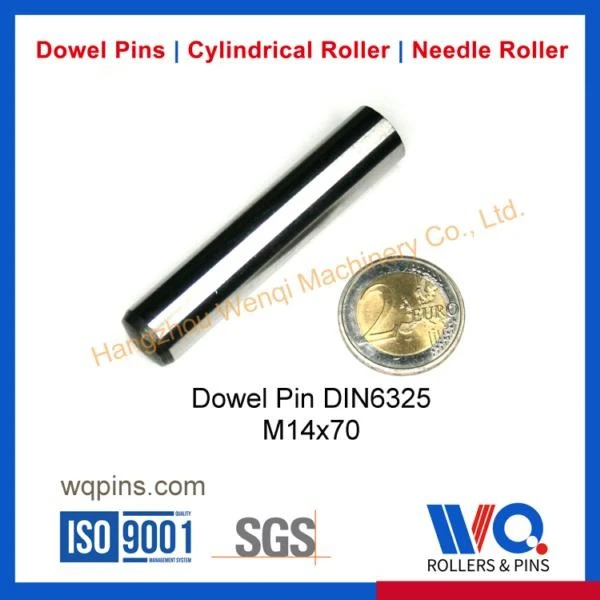

Quenching, a common heat - treatment process, involves rapidly cooling the dowel pin from a high temperature. This can result in a hard and brittle microstructure. Tempering, which is usually done after quenching, involves reheating the dowel pin to a lower temperature to reduce brittleness while maintaining some of the hardness. The choice of heat - treatment parameters, such as the quenching medium and tempering temperature, can have a significant impact on the final brittleness of the dowel pin.
Manufacturing Process
The manufacturing process can also affect the brittleness of 12mm dowel pins. For example, machining operations such as turning, milling, and drilling can introduce residual stresses into the material. These residual stresses can increase the likelihood of cracking and fracture, especially in brittle materials.
Cold - forming processes, on the other hand, can produce dowel pins with a more uniform microstructure and lower levels of residual stress. This can result in a more ductile and less brittle dowel pin. However, cold - forming may not be suitable for all materials or applications, especially those requiring high precision or complex geometries.
Assessing the Brittleness of 12mm Dowel Pins
There are several methods for assessing the brittleness of 12mm dowel pins. One common method is the Charpy impact test, which measures the energy absorbed by a material when it is subjected to a sudden impact. A lower energy absorption indicates a more brittle material.
Another method is the hardness test. While hardness is not directly equivalent to brittleness, there is often a correlation between the two. A very hard material is more likely to be brittle than a softer material. Common hardness tests include the Rockwell, Brinell, and Vickers hardness tests.
Microstructural analysis can also provide valuable information about the brittleness of a dowel pin. By examining the microstructure under a microscope, it is possible to identify features such as grain size, phase composition, and the presence of any defects or inclusions that may affect brittleness.
Managing Brittleness in 12mm Dowel Pins
To ensure the optimal performance of 12mm dowel pins, it is essential to manage their brittleness effectively. This can be achieved through careful material selection, appropriate heat treatment, and proper manufacturing processes.
When selecting a material for a 12mm dowel pin, it is important to consider the specific requirements of the application, such as the load - bearing capacity, corrosion resistance, and operating environment. If a high - strength material is required, but brittleness is a concern, a lower - carbon steel or a material with a more ductile microstructure may be a better choice.
Heat treatment should be carefully controlled to achieve the desired balance between hardness and brittleness. This may involve adjusting the quenching and tempering parameters based on the material and the application requirements. For example, in applications where a high level of toughness is required, a lower - temperature tempering process may be used to reduce brittleness.
During the manufacturing process, steps should be taken to minimize residual stresses. This can include using appropriate machining techniques, such as slow cutting speeds and proper coolant application, to reduce the heat generated during machining. Cold - forming processes can also be used to produce dowel pins with lower levels of residual stress.
Related Products
If you are interested in other types of dowel pins, we also offer CNC Machining Dowel Pins, 14mm Cylindrical Pins, and 18mm Steel Dowel Pins. These products are designed to meet a wide range of application requirements and offer high - quality performance.
Contact for Procurement
If you have any questions about the brittleness of 12mm dowel pins or are interested in purchasing our products, please feel free to contact us. We are committed to providing you with the best solutions and high - quality dowel pins that meet your specific needs. Our team of experts is available to assist you with any technical or procurement - related inquiries.
References
- Callister, W. D., & Rethwisch, D. G. (2011). Materials Science and Engineering: An Introduction. Wiley.
- ASM Handbook, Volume 1: Properties and Selection: Irons, Steels, and High - Performance Alloys. ASM International.