


As a trusted supplier of needle rollers, I understand the critical role these components play in various industrial applications. Ensuring the proper functioning of needle rollers is essential for the overall performance and longevity of machinery. In this blog post, I'll share some practical methods on how to check if needle rollers are damaged, helping you maintain the efficiency and reliability of your equipment.
Visual Inspection
One of the simplest and most straightforward ways to check for needle roller damage is through visual inspection. This method can reveal obvious signs of wear, such as cracks, chips, or deformation on the surface of the needle rollers.
First, you need to clean the needle rollers thoroughly to remove any dirt, grease, or debris that might obscure the damage. Use a suitable cleaning agent and a soft brush to gently clean the rollers. Once clean, place the needle rollers under good lighting and examine them carefully.
Look for any visible cracks on the surface of the needle rollers. Cracks can start small but may propagate over time, leading to complete failure of the roller. Pay special attention to the ends of the rollers, as these areas are more prone to stress and damage. Any chips or missing pieces on the surface are also clear indicators of damage.
Deformation is another common issue that can be detected visually. If the needle rollers are bent or have an irregular shape, they are likely damaged. This can occur due to excessive load, improper installation, or misalignment.
Measurement
In addition to visual inspection, measuring the dimensions of the needle rollers can provide valuable information about their condition. You can use precision measuring tools such as micrometers or calipers to measure the diameter and length of the needle rollers.
Compare the measured values with the manufacturer's specifications. If the measured dimensions deviate significantly from the specified values, it could indicate wear or damage. For example, if the diameter of a needle roller is smaller than the specified value, it may have experienced excessive wear, which can lead to reduced load - carrying capacity and increased friction.
It's important to take multiple measurements at different points along the length of the needle roller to ensure accuracy. Also, make sure to follow the proper measurement procedures to minimize errors.
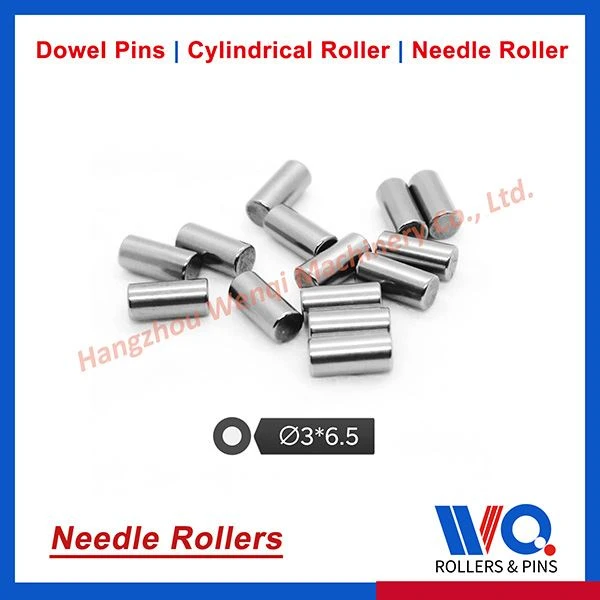

Rotation Test
A rotation test can help you detect problems with the needle rollers' internal structure and smoothness of rotation. To perform this test, place the needle roller on a flat, smooth surface and try to rotate it by hand.
A healthy needle roller should rotate smoothly without any jerks, sticking, or excessive resistance. If you feel any roughness or hear unusual noises during rotation, it could be a sign of damage. This could be due to internal cracks, uneven wear, or contamination inside the roller.
For more accurate results, you can use a rotation tester or a similar device. These tools can measure the rotational speed, torque, and other parameters to determine if the needle roller is functioning properly.
Surface Finish Analysis
The surface finish of needle rollers is crucial for their performance. A damaged or worn surface can increase friction, reduce the load - carrying capacity, and lead to premature failure.
You can use a surface roughness tester to analyze the surface finish of the needle rollers. This device measures the roughness of the surface and provides a numerical value. Compare the measured surface roughness with the manufacturer's specifications.
If the surface roughness is higher than the specified value, it indicates that the surface has been damaged, perhaps due to abrasion or corrosion. In some cases, you may also notice signs of pitting or scoring on the surface, which can be detected through visual inspection or with the help of a microscope.
Magnetic Particle Inspection
Magnetic particle inspection is a non - destructive testing method that can detect surface and near - surface cracks in ferromagnetic needle rollers. This method is based on the principle that when a magnetic field is applied to a ferromagnetic material, magnetic lines of force will be disrupted at the location of a crack.
To perform magnetic particle inspection, first, magnetize the needle roller. Then, apply magnetic particles (either in a dry or wet form) to the surface of the roller. The particles will accumulate at the locations of cracks, making them visible.
This method is highly sensitive and can detect very small cracks that may not be visible to the naked eye. However, it requires specialized equipment and trained personnel to perform the inspection accurately.
Ultrasonic Testing
Ultrasonic testing is another non - destructive testing method that can be used to detect internal defects in needle rollers. This method uses high - frequency sound waves to penetrate the material and detect any discontinuities, such as cracks or voids.
An ultrasonic transducer is used to send ultrasonic waves into the needle roller. When the waves encounter a defect, they are reflected back and detected by the transducer. The time it takes for the waves to return and the amplitude of the reflected waves can provide information about the location and size of the defect.
Ultrasonic testing is a powerful tool for detecting internal damage in needle rollers, but it also requires specialized equipment and expertise.
Importance of Regular Checks
Regularly checking the condition of needle rollers is crucial for preventing unexpected breakdowns and reducing maintenance costs. By detecting damage early, you can replace the damaged needle rollers before they cause more serious problems to the machinery.
In addition, regular checks can help you identify potential issues in the operating environment, such as excessive load, improper lubrication, or misalignment. Addressing these issues can improve the overall performance and lifespan of the needle rollers and the equipment they are used in.
Conclusion
As a supplier of high - quality needle rollers, I encourage you to take proactive measures to ensure the proper functioning of these components. By using the methods described above, you can effectively check if needle rollers are damaged and take appropriate actions in a timely manner.
If you are in the market for needle rollers, we offer a wide range of products to meet your needs. You can explore our product line, including Stainless Steel Parallel Pin Needle Rollers With Chamfer End, AISI Steel Needle Roller Pins, and Needle Roller 100Cr6.
If you have any questions or are interested in purchasing our needle rollers, please feel free to contact us for more information and to discuss your specific requirements. We look forward to working with you to provide the best solutions for your industrial needs.
References
- ASM Handbook Committee. (2004). ASM Handbook Volume 11: Failure Analysis and Prevention. ASM International.
- ISO 10012:2003. Measurement management systems - Requirements for measurement processes and measuring equipment.
- Machinery's Handbook 30th Edition. Industrial Press Inc.