


As a spring pins supplier, I often get asked, "How do I measure the size of spring pins?" It's a crucial question, especially when you're looking for the right fit for your project. In this blog post, I'll walk you through the process of measuring spring pins and why it matters.
Why Measuring Spring Pins Correctly is Important
First off, let's talk about why accurate measurements are a big deal. Spring pins are used in all sorts of applications, from automotive parts to electronic devices. Using the wrong size can lead to a whole bunch of problems. If the pin is too small, it might not hold the components together properly, which can cause parts to come loose and damage your product. On the other hand, if it's too big, you might have trouble inserting it, or it could even break the components it's supposed to connect. So, getting the measurements right is key to ensuring the functionality, safety, and longevity of your project.
Types of Spring Pins
There are different types of spring pins out there, and each might have its own specific way of being measured. The most common types are Coiled Spring Pins Stainless Steel, Spiral Spring Pins, and Metric Spring Pins.
Coiled spring pins are made by coiling a flat strip of metal into a tubular shape. They have a flexible design that makes them great for applications where there might be some movement or vibration. Spiral spring pins have a similar concept but with a different coiling pattern, which gives them unique properties. Metric spring pins are simply spring pins measured according to the metric system, which is widely used in many industries around the world.
Measuring the Diameter
The diameter of a spring pin is one of the most important measurements. To measure the diameter, you can use a caliper, which is a tool that can accurately measure the distance between two opposite sides of an object. Place the caliper jaws around the pin at its widest point for an external diameter measurement. If you need to measure the internal diameter (say, if the pin has a hollow center), you can use an inside caliper or a micrometer with an appropriate attachment.
Make sure to measure the pin at several different points along its length because there might be some slight variations. If you find that the pin has a tapered end, measure the widest and narrowest parts separately. This way, you'll have a clear understanding of its shape and can choose the right fit for your application.
Measuring the Length
Measuring the length of a spring pin is usually a straightforward process. All you need is a ruler or a measuring tape. Place the pin on a flat surface and stretch the measuring tool along its entire length from one end to the other. It's important to make sure the pin is straight and not bent for an accurate measurement. If the pin has a head or a special shape at one end, you need to decide whether you want to measure from the base of the head or include the head in the measurement, depending on your application requirements.
Measuring the Pitch (for Spiral Spring Pins)
If you're dealing with spiral spring pins, you also need to measure the pitch. The pitch is the distance between two consecutive coils. To measure it, you can count the number of coils in a given length and then divide the length by the number of coils. For example, if you have 10 coils in a 50-millimeter length, the pitch would be 5 millimeters. This measurement is important because it affects how the pin will expand and contract, and how it will interact with the mating parts. You can use a magnifying glass to get a more accurate view of the coils when counting them.
Considering the Material and Finish
When measuring spring pins, don't forget to take into account the material and the finish. Different materials might have different levels of elasticity and hardness, which can affect the performance of the pin. For example, stainless steel spring pins are more corrosion-resistant than carbon steel ones, but they might have slightly different dimensions due to the material properties.
The finish of the pin can also make a difference. A polished finish might add a small amount to the overall diameter, while a coating could change the surface properties and the way the pin fits into a hole. So, if you're working with specific tolerances, make sure to consider these factors in your measurements.
Tolerances in Spring Pin Measurements
Tolerances are basically the allowable amount of variation in the dimensions of a spring pin. All manufacturing processes have some degree of variation, so when you're measuring spring pins, you need to know the acceptable range for each dimension. For example, a pin might be specified as having a diameter of 5.00 mm with a tolerance of ±0.05 mm. This means that a pin with a diameter between 4.95 mm and 5.05 mm would be considered acceptable.
Tolerances are important because they ensure that the pin will fit correctly into the application and perform as intended. If the tolerances are too tight, it might be more difficult and expensive to manufacture the pins. On the other hand, if the tolerances are too loose, the pin might not work properly.
Using Measurement Standards
There are industry standards for spring pin measurements, such as ISO and ASTM. These standards provide detailed guidelines on how to measure spring pins, the acceptable tolerances, and the testing methods. It's a good idea to refer to these standards when measuring spring pins to ensure compatibility and reliability. By using standard measurements, you can be more confident that the pins you're using will work well with other components in your project.
Measuring in Different Environments
Sometimes, you might need to measure spring pins in different environments. For example, if you're working in a factory where there's a lot of dust or debris, make sure to clean the pin before measuring it. Otherwise, the dust could affect the accuracy of your measurement. If you're measuring pins in a high-temperature environment, keep in mind that the material might expand, which could change the dimensions. In this case, you might need to take temperature into account and use appropriate correction factors.
Quality Control and Verification
Once you've measured the spring pins, it's important to perform quality control and verification. You can use statistical process control techniques to analyze the measurements and make sure that the pins are within the acceptable specifications. You can also use gages or fixtures to quickly check if the pins meet the required dimensions.
If you find that some pins are out of tolerance, you need to decide whether to reject them or work with the supplier to find a solution. As a spring pins supplier, we offer support and can work with you to ensure that you get the right products for your needs.
Conclusion
Measuring the size of spring pins is an essential step in ensuring the success of your project. By following the steps I've outlined here - measuring the diameter, length, pitch (for spiral spring pins), and considering the material, finish, tolerances, and the environment - you can make informed decisions about which spring pins to use.

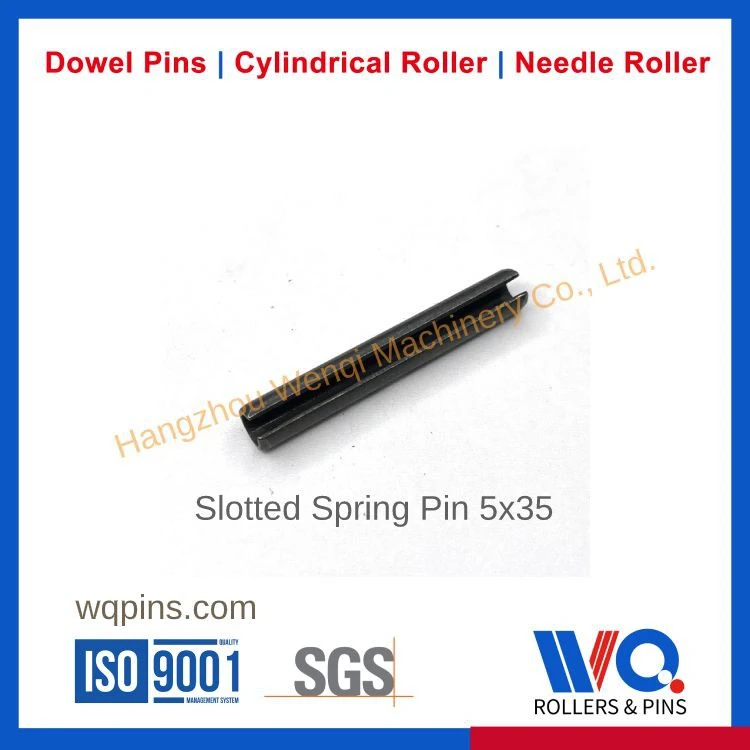
If you're in the market for high-quality spring pins and need more assistance with measurements or choosing the right product, feel free to reach out to us. We're always happy to help you find the perfect fit for your application. Whether it's Coiled Spring Pins Stainless Steel, Spiral Spring Pins, or Metric Spring Pins, we've got you covered. Let's start a conversation and find the best solution for your spring pin needs.
References
- Machinery's Handbook by Industrial Press, Inc.
- Standards provided by ISO (International Organization for Standardization) and ASTM (American Society for Testing and Materials)