


Hey there! As a supplier of needle rollers, I often get asked a bunch of questions about these tiny yet super - important components. One of the most common questions is, "Do needle rollers have a high friction coefficient?" Let's dig deep into this topic.
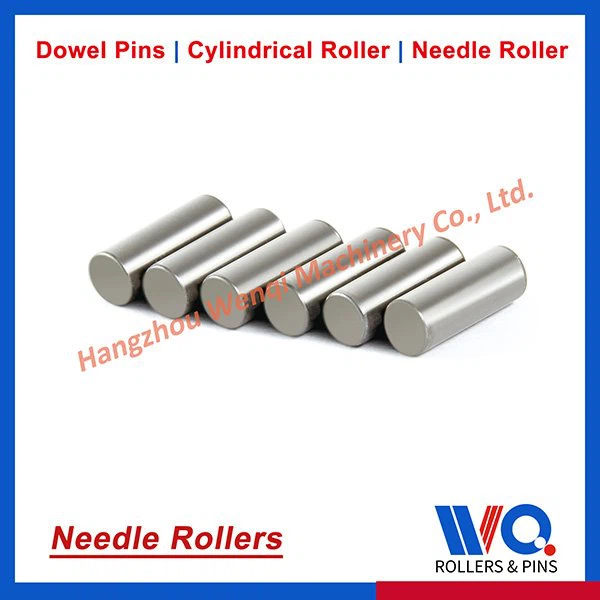
First off, what are needle rollers? Needle rollers are cylindrical rollers with a small diameter relative to their length. They're used in all sorts of applications, from automotive engines to industrial machinery. They're designed to handle high radial loads while taking up minimal space.

Now, let's talk about the friction coefficient. The friction coefficient is a measure of how much two surfaces resist sliding against each other. A high friction coefficient means there's a lot of resistance, while a low one means the surfaces can slide past each other more easily.
So, do needle rollers have a high friction coefficient? Well, the answer isn't a simple yes or no. It depends on a few factors.
Material Matters
The material of the needle roller plays a huge role in determining its friction coefficient. For example, Alloy Steel Needle Roller AISI52100 is a popular choice. This type of alloy steel is known for its high hardness and good wear resistance. When it comes to friction, alloy steel needle rollers generally have a relatively low friction coefficient.
This is because the smooth surface finish of the alloy steel reduces the contact area between the roller and the raceway. Less contact area means less friction. On the other hand, if the needle roller is made from a material with a rougher surface or a material that's more prone to sticking, the friction coefficient could be higher.
Surface Finish
The surface finish of the needle roller is another crucial factor. A smooth surface finish can significantly reduce the friction coefficient. Manufacturers use various techniques to achieve a smooth finish on needle rollers. For instance, precision grinding can create a mirror - like surface on the roller.
When the surface is smooth, there are fewer irregularities for the roller to catch on as it rolls along the raceway. This results in less friction. In contrast, a rough surface finish can increase the friction coefficient. Rough surfaces have more peaks and valleys, which can cause the roller to grip the raceway more tightly, leading to higher friction.
Lubrication
Lubrication is like magic when it comes to reducing the friction coefficient of needle rollers. A well - lubricated needle roller can have a much lower friction coefficient compared to a dry one.
Lubricants create a thin film between the needle roller and the raceway. This film separates the two surfaces, preventing direct contact and reducing friction. There are different types of lubricants available, such as oils and greases.
The choice of lubricant depends on the application. For high - speed applications, a low - viscosity oil might be the best choice as it can flow easily and provide good lubrication. For applications where the needle roller is exposed to dirt or moisture, a grease with good sealing properties might be more suitable.
Load and Speed
The load and speed at which the needle roller operates also affect its friction coefficient. At low loads and speeds, the friction coefficient is usually relatively low. The needle roller can roll smoothly along the raceway without much resistance.
However, as the load increases, the contact pressure between the needle roller and the raceway also increases. This can cause the lubricant film to break down in some areas, leading to increased friction. Similarly, at high speeds, the heat generated by the friction can cause the lubricant to thin out, reducing its effectiveness and increasing the friction coefficient.
Application Examples
Let's take a look at some real - world applications to see how these factors come into play.
In automotive engines, needle rollers are used in the camshaft and crankshaft bearings. These applications require low friction to improve fuel efficiency. That's why 4x5mm Flat Ended Loose Needle Rollers made from high - quality alloy steel with a smooth surface finish are often used. They're also well - lubricated to ensure a low friction coefficient.
In industrial machinery, such as conveyor systems, needle rollers are used to support the moving parts. Depending on the load and speed of the conveyor, the friction coefficient needs to be carefully managed. If the friction is too high, it can cause excessive wear on the components and increase energy consumption.
Comparing with Other Types of Rollers
How do needle rollers compare to other types of rollers in terms of friction coefficient? Well, compared to ball bearings, needle rollers generally have a slightly higher friction coefficient.
Ball bearings have a point contact with the raceway, which means there's less contact area and less friction. Needle rollers, on the other hand, have a line contact with the raceway. This larger contact area can result in slightly higher friction.
However, needle rollers can handle much higher radial loads than ball bearings. So, in applications where high load - carrying capacity is required, the slightly higher friction coefficient of needle rollers is often an acceptable trade - off.
Measuring the Friction Coefficient
Measuring the friction coefficient of needle rollers isn't always easy. There are various methods available, but they all have their limitations.
One common method is to use a friction testing machine. This machine applies a known load to the needle roller and measures the force required to make it move. By dividing the force by the load, the friction coefficient can be calculated.
However, this method only provides an approximation. The actual friction coefficient in a real - world application can be affected by many factors that are difficult to replicate in a laboratory setting.
Conclusion
So, to answer the question "Do needle rollers have a high friction coefficient?" - it depends. The friction coefficient of needle rollers can vary widely depending on the material, surface finish, lubrication, load, and speed.
In most cases, with the right combination of these factors, needle rollers can have a relatively low friction coefficient. This makes them a great choice for applications where low friction and high load - carrying capacity are required.
If you're in the market for needle rollers, whether it's 4x5mm Flat Ended Loose Needle Rollers, Alloy Steel Needle Roller AISI52100, or Needle Roller 2x16, I'd love to help you find the perfect solution for your application. Feel free to reach out to discuss your specific requirements and let's have a chat about how we can work together to get you the best needle rollers for your needs.
References
- "Bearing Design and Application Handbook"
- "Materials Science for Engineers"
- Industry research papers on needle roller bearings