


As a supplier of needle rollers, the question of whether needle rollers have high creep resistance is one that I often encounter in my line of work. Creep resistance is a crucial property in many industrial applications, especially those where components are subjected to continuous stress over long periods. In this blog post, I will delve into the concept of creep resistance, explore the factors that influence it in needle rollers, and provide insights based on my experience in the industry.
Understanding Creep Resistance
Creep is the gradual deformation of a material under a constant load over time. This phenomenon occurs even when the applied stress is below the material's yield strength. Creep resistance, therefore, refers to a material's ability to resist this gradual deformation. In the context of needle rollers, high creep resistance is essential to maintain the dimensional stability of the bearing and ensure its long - term performance.
Factors Affecting Creep Resistance in Needle Rollers
Material Composition
The material used in manufacturing needle rollers plays a significant role in determining their creep resistance. High - quality bearing steels, such as chromium - molybdenum steels, are commonly used due to their excellent mechanical properties. These steels have a fine - grained microstructure, which provides better resistance to creep. The alloying elements in these steels, like chromium and molybdenum, enhance the material's strength and hardness, making it more resistant to deformation under load.
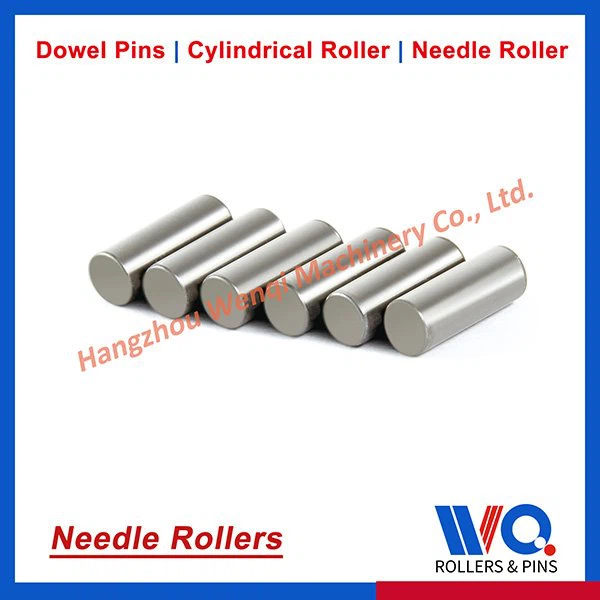
For example, the Needle Roller Pins NRB in our product range are made from high - grade bearing steel. This steel is carefully selected for its ability to withstand high stresses without significant creep. The manufacturing process also involves heat treatment, which further refines the microstructure of the steel, improving its creep resistance.
Heat Treatment
Heat treatment is a critical step in the production of needle rollers. Processes such as quenching and tempering can significantly enhance the material's mechanical properties, including creep resistance. Quenching rapidly cools the steel from a high temperature, creating a hard and strong martensitic structure. Tempering is then carried out to relieve the internal stresses generated during quenching and to improve the material's toughness.
Proper heat treatment ensures that the needle rollers have a uniform hardness distribution throughout their cross - section. This uniformity is essential for maintaining consistent creep resistance. Our Needle Roller NRB products undergo a precisely controlled heat treatment process to optimize their creep resistance and overall performance.

Surface Finish
The surface finish of needle rollers can also affect their creep resistance. A smooth surface finish reduces the stress concentration points on the roller, which in turn reduces the likelihood of creep initiation. During the manufacturing process, we use advanced grinding and polishing techniques to achieve a high - quality surface finish on our needle rollers.
For instance, our 4x5mm Flat Ended Loose Needle Rollers have a very smooth surface finish. This smooth surface not only improves the creep resistance but also reduces friction and wear, leading to a longer service life of the bearing.
Testing and Evaluation of Creep Resistance
To ensure that our needle rollers meet the highest standards of creep resistance, we conduct rigorous testing. One common method is the creep test, where a constant load is applied to the needle roller for an extended period, and the resulting deformation is measured over time.
We also use advanced simulation techniques to predict the creep behavior of our needle rollers under different operating conditions. These simulations take into account factors such as material properties, load distribution, and temperature. By combining experimental testing and simulation, we can accurately assess the creep resistance of our products and make any necessary adjustments to the manufacturing process.
Real - World Applications and Creep Resistance
In many industrial applications, needle rollers are subjected to high loads and continuous operation. For example, in automotive engines, needle rollers are used in the camshaft and crankshaft bearings. These bearings are exposed to high - speed rotation and significant mechanical stresses. High creep resistance is crucial in this application to prevent bearing failure and ensure the smooth operation of the engine.
In the aerospace industry, needle rollers are used in various components, such as landing gear and flight control systems. The reliability and performance of these components are of utmost importance, and high creep resistance is essential to meet the strict safety standards.
Conclusion
In conclusion, needle rollers can have high creep resistance when they are manufactured using high - quality materials, proper heat treatment, and advanced manufacturing techniques. Our company, as a supplier of needle rollers, is committed to providing products with excellent creep resistance to meet the diverse needs of our customers.
If you are in need of high - performance needle rollers with superior creep resistance, we invite you to contact us for procurement and further discussions. Our team of experts is ready to assist you in selecting the right needle rollers for your specific application.
References
- ASM Handbook, Volume 1: Properties and Selection: Irons, Steels, and High - Performance Alloys
- Tribology Handbook, Edited by Bharat Bhushan
- "Bearing Design and Application Engineering" by Schaeffler Group